How Do You Choose Wholesale Coffee Packaging for Ground Coffee?
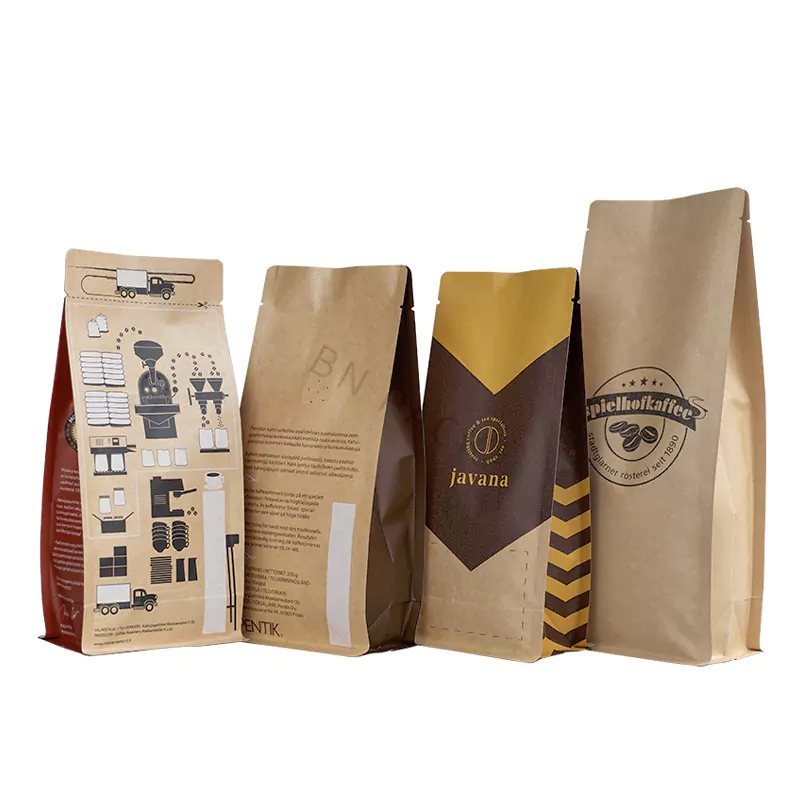
Wholesale ground-coffee packaging should be chosen around oxygen exposure, moisture control, sealing reliability, pack size, filling speed, and shelf-life targets—not appearance alone. SCA-reviewed research found that reducing package oxygen to 0.5% could extend coffee shelf life about 20-fold, while another study reported roughly 10% faster degradation for each 1% rise in oxygen. Ground coffee also releases trapped CO₂ far faster than whole beans after grinding. For wholesale programs, compare barrier data, seal strength, valve need, residual oxygen after packing, MOQ, print method, food-contact compliance, transport testing, and storage conditions before comparing the final price per empty bag.
Ground coffee is harder to protect than whole beans because grinding increases surface area and opens the roasted cellular structure. SCA material notes that CO₂ loss that takes weeks in whole beans can occur within minutes after grinding, while volatile sulfur compounds and aldehydes disappear quickly during storage. A literature review also reported methanethiol at about 30% of its initial level after 8 days in one study. Packaging therefore has to be specified around the packed coffee and expected shelf life rather than around a generic “coffee bag” description.
Oxygen control comes first because coffee aroma compounds and lipids oxidize after roasting. In research summarized by the SCA, lowering oxygen to 0.5% increased shelf life by about 20 times, and a separate study associated every 1% rise in oxygen with about a 10% increase in degradation rate. Those figures do not create one shelf-life rule for every coffee because roast level, grind, temperature, water activity, package structure, and seal quality differ. They do show why supplier OTR data and packer residual-oxygen readings deserve more attention than film thickness alone.
Ask for oxygen transmission rate and water-vapor transmission rate under stated test conditions. A number without temperature, relative humidity, test method, or units is difficult to compare. A 120-micron laminate can perform worse than a thinner structure if its barrier layer, adhesive quality, folds, valve fit, or seals allow more gas transfer.
Barrier structure then has to match the route to market. PET, PE, PP, metallized films, aluminum foil, and paper-faced laminates are used in different combinations because one layer may provide printability while another provides sealing or gas resistance. SCA freshness work presented in 2019 compared packages at 4°C, 15°C, and 30°C and showed that more protective aluminum-containing structures limited oxidation better than porous packages under the tested conditions. A 25°C temperature increase also produced about a 100-fold change in one measured freshness index, so warehouse temperature belongs in packaging discussions.
Paper appearance should therefore be treated separately from barrier performance. kraft paper coffee bags may use kraft as an outer layer while relying on an internal film or laminate for heat sealing and protection. Buyers should request the full layer structure rather than assuming that a brown paper surface describes the whole package. For a product expected to remain in distribution for 6 or 12 months, compare the complete pouch after printing, lamination, valve insertion, filling, and sealing rather than relying on a raw film sample.
Pack atmosphere is the next variable. Fresh roast coffee gives off CO₂, so a one-way valve can release internal gas while limiting outside air entry, but not every ground-coffee program needs one. Timing matters: coffee packed soon after roasting may release more gas than coffee held before grinding and filling. In a small 2008 flexible-package study summarized by the SCA, only 6 valve bags were examined and 3 showed seal leaks. The sample was too small for broad conclusions, but it illustrates why a valve cannot compensate for an unreliable top seal.
Nitrogen flushing can reduce oxygen at sealing, yet performance should be checked with a residual-oxygen meter rather than assumed from the presence of flushing equipment. One study cited by the SCA reported a 6-month sensory shelf life for nitrogen-flushed coffee versus 3 months for coffee packed without flushing. Another study reported a fivefold lower staling rate for vacuum-packed coffee than for coffee packed in air. Results depend on coffee, package, process, and storage conditions, so suppliers should support filled-package testing rather than promise the same shelf life for every product.
A 30-bag pilot run can also reveal filling and sealing differences before thousands of printed pouches are produced. Samples taken from the beginning, middle, and end of the run can be checked for residual oxygen, seal appearance, valve position, zipper alignment, and visible coffee contamination around the seal. Repeating measurements across several fill points provides more useful information than inspecting one hand-filled sample.
The package size also changes exposure after opening. A 1 kg foodservice bag may work well for a café using 250 g per day because it can be consumed in about 4 days, while the same 1 kg pack can remain open far longer in a low-volume setting. SCA research on secondary shelf life found that reducing the amount of air introduced during repeated opening and reclosing improved freshness retention. Package geometry, opening width, zipper position, and expected consumption rate should therefore be reviewed together.
| Item to compare | What to request from the supplier | Why it matters |
|---|---|---|
| Barrier | OTR and WVTR with test conditions | Supports shelf-life comparison |
| Seal | Seal-strength range and sealing window | Helps reduce leaks and line rejects |
| Valve | Valve type, placement, insertion tolerance | Affects degassing and line consistency |
| Size | Width, height, gusset, fill-volume tolerance | Prevents overfilled or underfilled packs |
| Process, color tolerance, repeat length | Supports consistency across large runs | |
| Compliance | Food-contact declaration and traceability documents | Supports market access and audits |
Bag dimensions should be based on volume as well as net weight. Two 500 g ground coffees can occupy different volumes because roast level and grind alter bulk density. The practical method is to send the converter a representative coffee sample or measured bulk-density range, then run filled prototypes. A pouch that is only 5–10 mm short in a working dimension can increase the chance of coffee reaching the seal area, while excessive headspace adds material and can reduce case-packing efficiency.
Filling equipment can rule out otherwise suitable packaging. Vertical and premade-pouch systems have different feeding, zipper, seal, and friction requirements; manual lines are more tolerant but slower. Before approving a printed order of 50,000 or 100,000 units, run production material at normal speed rather than only testing blank samples at reduced speed. Record seal temperature, dwell time, reject rate, bag tracking, valve position, and coffee dust in the sealing area. Even a 1% reject rate represents 1,000 affected packs on a 100,000-unit run.
Wholesale price comparisons should include MOQ and inventory age. If a custom print run requires 100,000 bags and one SKU uses 5,000 bags per month, the order represents about 20 months of packaging before changes in sales, artwork, or product range are considered. Digital printing can suit shorter runs or many SKUs, while flexographic or gravure printing can become economical at larger stable volumes. Quotations should separate bag price, printing setup, plates or cylinders where applicable, valves, zippers, freight, duties, cartons, and storage.
A bag priced $0.02 lower saves $2,000 on 100,000 units before production losses are counted. If the cheaper structure produces a 2% reject rate, 2,000 filled packs require rework or disposal. The coffee, labor, valve, label, filling time, and replacement pouch all belong in the cost comparison.
Food-contact documentation belongs in the specification, especially when products move across several markets. In the European Union, Regulation (EC) No 1935/2004 sets general requirements for materials intended to contact food and includes traceability provisions. Article 15 also addresses labeling information for materials not yet in contact with food. Buyers should request documentation matching the actual laminate, adhesive, ink system, and intended use rather than accepting a certificate issued for another material structure.
Shelf-life approval should use filled packages from the intended production process. A practical test plan can include at least 3 production lots, samples from the beginning, middle, and end of each run, residual-oxygen readings after sealing, leak testing, transport simulation, and scheduled sensory or aroma checks. If a 12-month shelf life is claimed, testing only a fresh pouch and a 2-week sample leaves most of the stated storage period unexamined. Retain samples should be kept under recorded temperature and humidity conditions with the packaging lot identified.
Storage conditions also need to match commercial reality. SCA research presented in 2019 showed substantial differences in freshness measurements across 4°C, 15°C, and 30°C conditions, so shelf-life data generated in a cool laboratory should not automatically be applied to warmer warehouses or distribution routes. Packaging trials should include temperatures that resemble the highest credible storage conditions for the intended market, especially when products may spend weeks in non-climate-controlled freight or regional warehouses.
Print quality should be checked as part of production rather than treated only as artwork approval. On a 100,000-bag order, small shifts in registration, zipper placement, tear-notch position, or valve location can affect thousands of units. Buyers can define tolerances for dimensions, print registration, repeat length, valve placement, and seal area before production. Random inspection samples from multiple cartons are more useful than examining 10 bags taken from a single carton because defects may occur only during one part of the converting run.
Resealable features deserve the same attention. A zipper helps consumers reduce package opening after the first use, but it does not restore the original low-oxygen atmosphere. In secondary shelf-life work discussed by the SCA, smaller openings and tighter reclosing reduced air introduction compared with less effective closures. For a 250 g retail pack used over 7–14 days, zipper position, usable opening width, and the amount of headspace left after opening can affect how much air is introduced during repeated use.
For supplier comparison, use the same RFQ fields for every converter: 250 g, 500 g, or 1 kg fill; target dimensions; annual volume; number of artworks; OTR and WVTR data; zipper and valve details; nitrogen-flush compatibility; food-contact documents; carton quantity; pallet pattern; production tolerances; lead time; and defect-handling terms. Request pre-production samples, then approve commercial production only after at least 30 filled packs have been checked for filling, sealing, leakage, dimensions, valve placement, residual oxygen where applicable, and storage performance with the actual ground coffee.